Starter
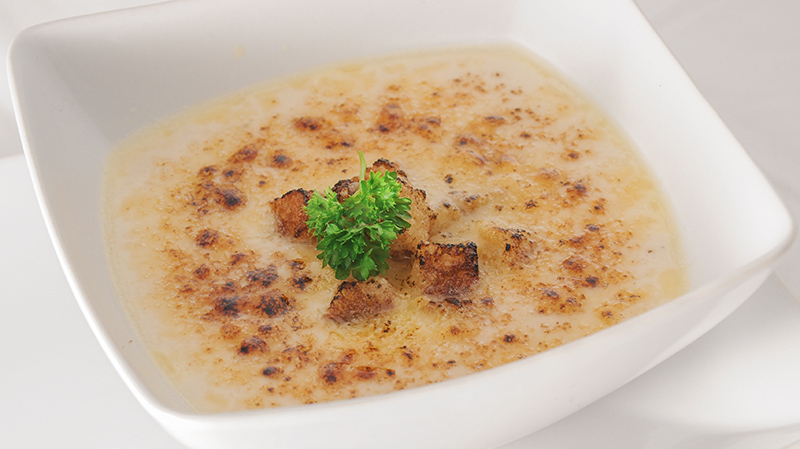
Gratinated Cauliflower Soup
At first glance cauliflower may seem a rather dull vegetable, with its pale colour leaning towards beige. But it is something of a rough diamond on the vegetable counter and, cooked right, offers both great flavour and an interesting texture. In a soup it adds body and a mild flavour that plays delicately with the other ingredients.
Ingredients
- Cauliflower head1/2 pcs
- Shallots4 pcs
- White wine0.8 cups
- Cream3.4 fl oz
- Vegetable bouillon cube1 pcs
- Honey1.5 tsp
- Rapeseed oil1 tbsp
- Västerbotten cheese (grated)0.6 cups
- Salt
- Black pepper
Nutrition per serving
Instructions
Finely chop the shallots and fry them in oil to give them a little colour. Add the wine, honey, stock cube and finely chopped cauliflower and simmer gently for about 10–15 minutes, until the cauliflower is soft. Add the cream and 100 ml (scant ½ cup) of the cheese. Blend with a stick blender until smooth and season with pepper and, if needed, salt.
Depending on the cauliflower, the soup can turn out a little thin. That is easily fixed by thickening it with cornflour and bringing it back to the boil. Divide between bowls and sprinkle the rest of the grated Västerbotten cheese on top (a well-aged Parmesan works if you can’t find it). Brown with a kitchen blowtorch for a gratinated top.
Garnish with something green if you like, and serve at once!