Three-course menu

Cauliflower, Plaice and Rhubarb

This light late-summer menu pairs the creaminess of the starter soup with the crunch of the breaded plaice, and finishes with a wonderful rhubarb pie and a homemade vanilla custard that turns out just the way you want it.

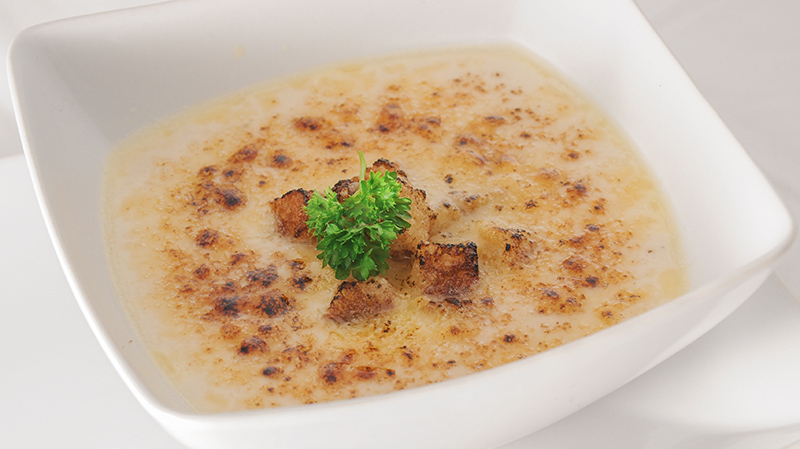
Gratinated cauliflower soup.

Starter

Gratinated Cauliflower Soup

45 min 4 servings

At first glance cauliflower may seem a rather dull vegetable, with its pale colour leaning towards beige. But it is something of a rough diamond on the vegetable counter and, cooked right, offers both great flavour and an interesting texture. In a soup it adds body and a mild flavour that plays delicately with the other ingredients.

Servings
4

Ingredients

  • Cauliflower head1/2 pcs
  • Shallots4 pcs
  • White wine0.8 cups
  • Cream3.4 fl oz
  • Vegetable bouillon cube1 pcs
  • Honey1.5 tsp
  • Rapeseed oil1 tbsp
  • Västerbotten cheese (grated)0.6 cups
  • Salt
  • Black pepper

Nutrition per serving

Energy255 kcal
Protein6.5 g
Carbohydrates7.3 g
Fat18.4 g
Fiber2.1 g

Instructions

Finely chop the shallots and fry them in oil to give them a little colour. Add the wine, honey, stock cube and finely chopped cauliflower and simmer gently for about 10–15 minutes, until the cauliflower is soft. Add the cream and 100 ml (scant ½ cup) of the cheese. Blend with a stick blender until smooth and season with pepper and, if needed, salt.

Depending on the cauliflower, the soup can turn out a little thin. That is easily fixed by thickening it with cornflour and bringing it back to the boil. Divide between bowls and sprinkle the rest of the grated Västerbotten cheese on top (a well-aged Parmesan works if you can’t find it). Brown with a kitchen blowtorch for a gratinated top.

Garnish with something green if you like, and serve at once!
Tips & Inspiration

Wine

White wine is usually made from green grapes, but red grapes can be used too, since the colour sits in the skins. If the skins are removed straight after pressing, you get a white wine. If the juice and skins are left together for a few hours up to a few days, you get a rosé instead. Red wines come from juice and skins fermenting together, sometimes for several months.

Västerbotten cheese

Västerbotten cheese is sometimes called northern Sweden's own Parmesan. It is a flavourful cheese made at the dairy in Burträsk. According to legend, it came about by accident late in 1872, when the dairymaid Ulrika Eleonora Lindström was working alone at the Gammelbyn dairy in Burträsk. She had to leave the cheese she was making for other duties; some rumours claim these duties had to do with love. As a result the curd cooled and was reheated several times, and the cheese did not turn out as intended. Despite the mistake, it was delicious and quickly became a success across the country.

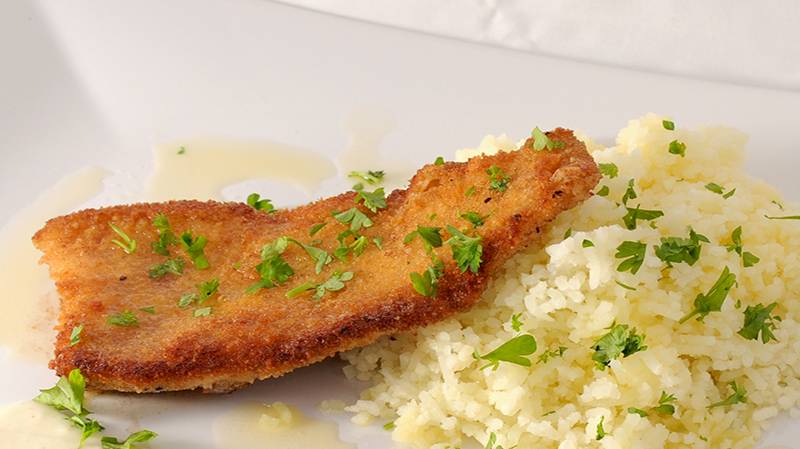
Double-breaded plaice with riced potatoes and melted butter.

Main Course

Double-Breaded Plaice

25 min 4 servings

Plaice is a wonderful eating fish. Breading it twice gives it a crisp exterior while the fish itself cooks gently, protected by the coating. The double breading makes a thicker, luxuriously crunchy crust with a lovely buttery flavour.

Servings
4

Ingredients

  • Plaice fillets1.3 lb
  • Wheat flour0.8 cups
  • Breadcrumbs1.3 cups
  • Eggs2 pcs
  • Salt
  • Pepper
  • Floury potatoes1.8 lb

Nutrition per serving

Energy585 kcal
Protein44.6 g
Carbohydrates81.9 g
Fat6.6 g
Fiber7.1 g

Instructions

If you are not lucky enough to find a fishmonger with fresh plaice, frozen works well. Let the frozen plaice thaw slowly in the fridge, ideally overnight, then pat the fillets dry with kitchen paper. Spread the flour, beaten egg and breadcrumbs on separate plates. Season both sides of the fillets with salt and pepper. Turn them in the flour, then in the egg and finally in the breadcrumbs. Fry the fillets in butter in a cast-iron pan over medium heat until the coating is nicely golden, about 1 minute per side.

Riced potatoes

Peel the potatoes and boil them until done. Then press them through a potato ricer straight onto the plates.

Place the fish on top of the potatoes. Garnish with fresh herbs if you like.

Tips & Inspiration

Potatoes

The potato comes from South America and became popular in Sweden in the 19th century, largely because it became widely known that it could be distilled into schnapps. There are more than 4,000 varieties of potato, differing in colour, shape and flavour.

Breading

Classic breading is done in three steps: flour, beaten egg and finally breadcrumbs. The flour dries the surface so the egg sticks, and the egg in turn holds the breadcrumbs. Pat the fish dry with kitchen paper before you start. Keep one hand for the dry and one for the wet, and you avoid breaded fingers. Double breading, two rounds of egg and breadcrumbs, gives an extra crisp crust.

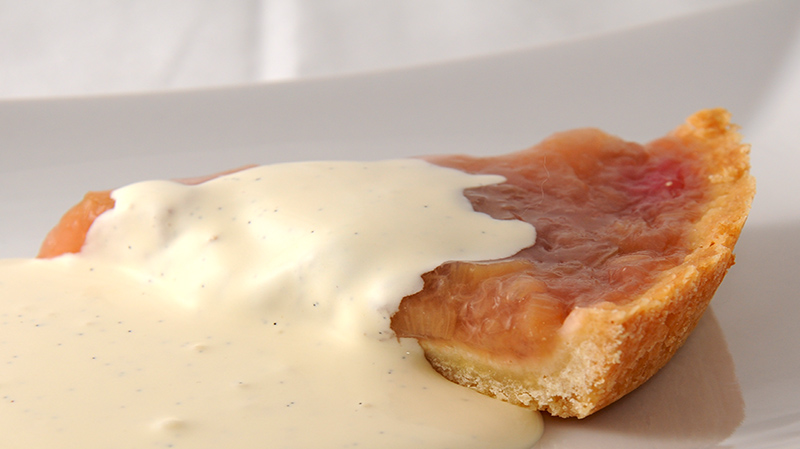
Rhubarb pie with homemade vanilla custard.

Dessert

Rhubarb Pie with Vanilla Custard

1 h 35 min 4 servings

Rhubarb is a classic in Swedish gardens, and for many its flavour means summer and lush green gardens. With the rhubarb pie we make a truly wonderful homemade vanilla custard. In French, vanilla custard is called crème anglaise, which translates as "English sauce", most likely because of the English fondness for custard. Making a proper vanilla custard isn't difficult if you follow our instructions.

Servings
4

Ingredients

Pastry

  • Flour1.1 cups
  • Sugar2.5 fl oz
  • Butter3.5 oz
  • Water1 tsp

Filling

  • Rhubarb stalks3 pcs
  • Sugar0.6 cups
  • Water1 tbsp
  • Potato starch2 tsp

Vanilla custard

  • Egg yolks3 pcs
  • Milk3.4 fl oz
  • Cream3.4 fl oz
  • Sugar3.4 fl oz
  • Vanilla pod1/2 pcs

Nutrition per serving

Energy744 kcal
Protein6.5 g
Carbohydrates99.7 g
Fat35.2 g
Fiber1.4 g

Instructions

Pastry

Take the butter out an hour or so beforehand so it comes to room temperature. Heat the oven to 225°C (440°F). Mix the butter with the rest of the pastry ingredients and knead into a smooth dough. Let the dough rest in the fridge for about 30 minutes, then press it into a pie dish and pre-bake it for about 10 minutes.

Filling

While the pastry case is pre-baking, slice the rhubarb stalks. Put them in a saucepan with the sugar, water and potato starch and simmer for about 10 minutes, until the rhubarb is pleasantly soft. Pour the filling into the pastry case and bake for about 20 minutes.

Vanilla custard

The recipe makes about 500 ml (2 cups) of custard. If you know your guests are crazy about custard, it is well worth doubling it. Start by mixing the milk and cream in a saucepan. Slit the vanilla pod lengthways to open it up, then run the knife along the inside to scrape out all the seeds. Add the seeds and the pod to the saucepan and bring to the boil, then simmer gently for about 5 minutes. Milk burns easily, so keep stirring with a whisk.

Take the pan off the heat and leave it to infuse for about 10 minutes. This also lets it cool a little, which is important so the eggs don’t curdle. Meanwhile, separate the eggs. Keep the whites: they make meringues, or why not a healthy omelette? Whisk the yolks with the sugar until pale and fluffy. Remove the vanilla pod from the milk and cream, then stir in the whisked yolks.

Now comes the most critical step: the custard should be heated to about 75°C (167°F). If you have never made it before, a good kitchen thermometer is essential. Heat over medium heat, whisking constantly, until the custard reaches about 75°C. The exact temperature can vary a little, but by then the custard should have thickened. If you heat it too much, it will curdle. As soon as it has thickened, put the pan straight into an ice-cold water bath and keep whisking for another minute or so. Then leave the custard to cool. It is best made the day before and left in the fridge overnight to really take on all the lovely vanilla aromas.

Tip: For a slightly fresher custard, add the zest of a lime or lemon together with the vanilla pod at the start.

Tips & Inspiration

Crème anglaise

Vanilla custard and most ice cream bases are built on crème anglaise: milk and cream thickened with egg yolks and sugar. Heat gently, stirring, until the custard thickens and coats the back of a spoon, at around 82–85°C (180–185°F). It must not boil, or the yolks set into small lumps. Strain the custard if you like, and cool it quickly.

Rhubarb

Rhubarb counts as a vegetable but is almost always used as a fruit. Only the stalks are eaten; the leaves contain a lot of oxalic acid and should not be eaten. Traditionally rhubarb is harvested until Midsummer, when the stalks are at their juiciest. Later in the summer they become stringier and more sour. Young, red stalks don't need peeling.