Starter
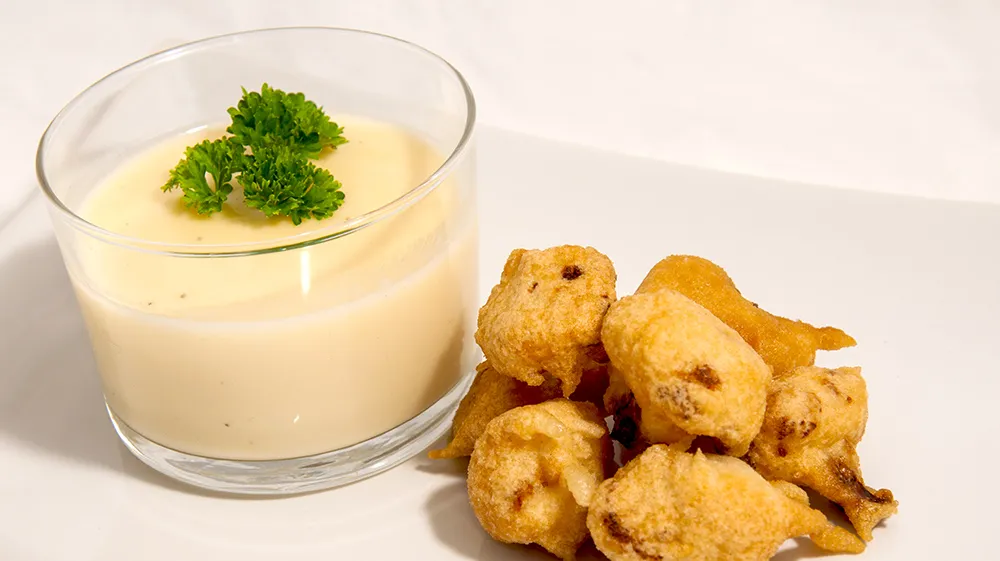
Deep-Fried Cauliflower with Cheese Sauce
Crisp, golden cauliflower florets with a rich cheese sauce. At first glance cauliflower can seem a rather dull vegetable, with its pale, slightly beige colour. But it is something of a rough diamond: cooked the right way it has both great flavour and an interesting texture. Lifted by a light, crisp batter and a good cheese sauce, it becomes something special.
Ingredients
Cheese sauce
- Butter1 tbsp
- Flour1 tbsp
- Milk0.8 cups
- Mature cheese3.5 oz
- Honey1 tsp
- Cayenne pepper1 pinch
- Salt
- Black pepper
Batter
- Flour0.8 cups
- Water0.6 cups
- Egg white1 pcs
- Sugar1 tsp
- Baking powder1 tsp
- Salt
- Frying oil8.5 cups
- Cauliflower1.1 lb
Nutrition per serving
Instructions
Cheese sauce Melt the butter in a saucepan, then take it off the heat. Stir in the flour to a smooth paste. Add the milk and honey, and season with salt, pepper and cayenne. Bring to the boil and cook for about 2 minutes, stirring constantly. Grate the cheese and stir it in until melted. Serve straight away.
Batter Mix the flour, baking powder, sugar and salt. Add the water and whisk to a smooth batter. Whisk the egg white to stiff peaks and gently fold it into the batter to make it light and airy.
Frying Heat the oil to 175°C (350°F); a thermometer is essential for keeping an eye on the temperature. Cut the cauliflower into small florets. Dip them in the batter and fry in batches for 3–4 minutes, until golden brown. Drain on kitchen paper for a minute. They are best eaten straight away, while they are really crisp. If you fry in batches, you can keep them warm in the oven at 100°C (210°F) for 10–15 minutes until all the batches are done. Any longer and they turn soft.