Three-course menu

A Green Feast

An all-vegetarian menu that leaves nothing to be desired. The starter pairs crisp deep-fried cauliflower with a creamy cheese sauce. The main course brings together fresh beetroot and a full-flavoured chèvre sauce, and it all ends with a heavenly green tea ice cream topped with crunchy coconut cookies.

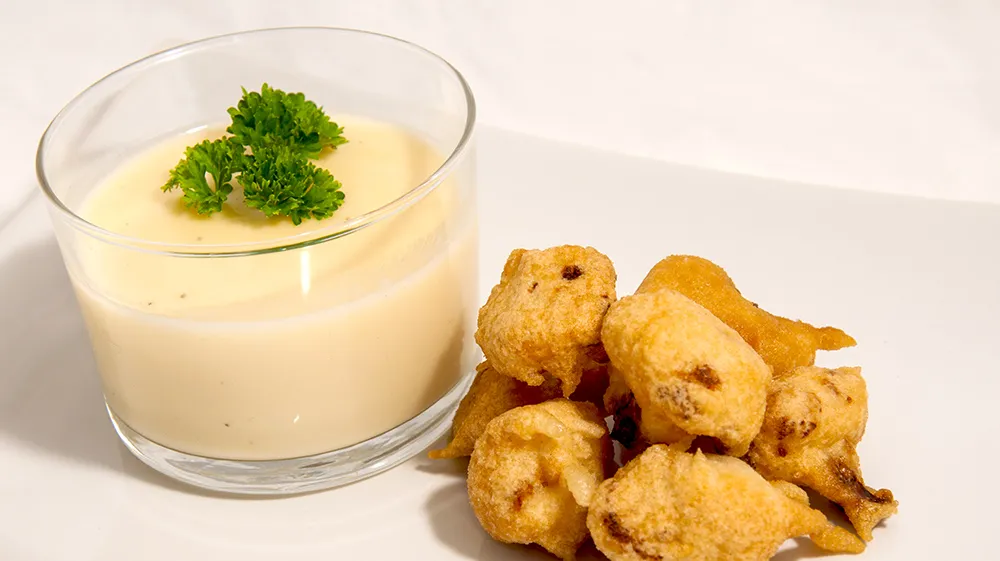
Deep-fried cauliflower with cheese sauce.

Starter

Deep-Fried Cauliflower with Cheese Sauce

1 h 5 min 4 servings

Crisp, golden cauliflower florets with a rich cheese sauce. At first glance cauliflower can seem a rather dull vegetable, with its pale, slightly beige colour. But it is something of a rough diamond: cooked the right way it has both great flavour and an interesting texture. Lifted by a light, crisp batter and a good cheese sauce, it becomes something special.

Servings
4

Ingredients

Cheese sauce

  • Butter1 tbsp
  • Flour1 tbsp
  • Milk0.8 cups
  • Mature cheese3.5 oz
  • Honey1 tsp
  • Cayenne pepper1 pinch
  • Salt
  • Black pepper

Batter

  • Flour0.8 cups
  • Water0.6 cups
  • Egg white1 pcs
  • Sugar1 tsp
  • Baking powder1 tsp
  • Salt
  • Frying oil8.5 cups
  • Cauliflower1.1 lb

Nutrition per serving

Energy705 kcal
Protein14.1 g
Carbohydrates34.1 g
Fat57 g
Fiber3.4 g

Instructions

Cheese sauce Melt the butter in a saucepan, then take it off the heat. Stir in the flour to a smooth paste. Add the milk and honey, and season with salt, pepper and cayenne. Bring to the boil and cook for about 2 minutes, stirring constantly. Grate the cheese and stir it in until melted. Serve straight away.

Batter Mix the flour, baking powder, sugar and salt. Add the water and whisk to a smooth batter. Whisk the egg white to stiff peaks and gently fold it into the batter to make it light and airy.

Frying Heat the oil to 175°C (350°F); a thermometer is essential for keeping an eye on the temperature. Cut the cauliflower into small florets. Dip them in the batter and fry in batches for 3–4 minutes, until golden brown. Drain on kitchen paper for a minute. They are best eaten straight away, while they are really crisp. If you fry in batches, you can keep them warm in the oven at 100°C (210°F) for 10–15 minutes until all the batches are done. Any longer and they turn soft.
Have you cooked it?

Rate it and help others choose.

Tips & Inspiration

Deep-frying

The oil should stay at 175–180°C (350–355°F). If it is too cold, whatever you are frying soaks up oil and turns greasy. If it is too hot, the outside burns before the inside is done. Use a neutral oil that tolerates high heat, such as rapeseed oil, and fry in small batches so the temperature doesn't drop. Drain on a rack to keep the coating crisp.

Taste as you go

Taste the food throughout the cooking, not just at the end. A dish that tastes flat often needs acidity, a splash of lemon or vinegar for example, rather than more salt. Salt lifts flavours, acidity freshens, sweetness rounds off and heat adds depth. Cold food also needs more salt than hot food, since flavours seem weaker when food is cold.

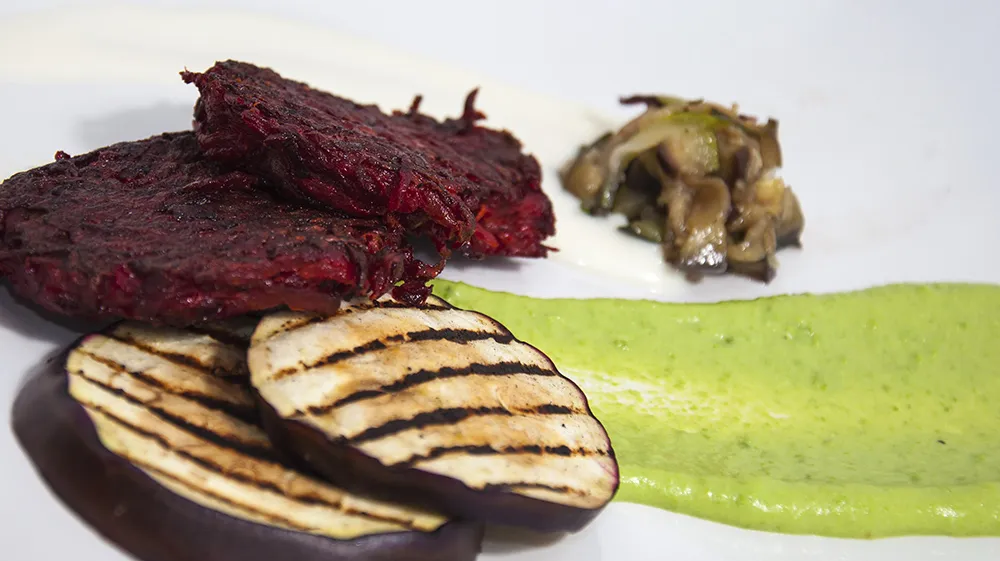
Beetroot patties with chèvre sauce and green pea purée, served with grilled aubergine.

Main Course

Beetroot Patties with Chèvre Sauce and Pea Purée

50 min 4 servings

Beetroot and chèvre are a true match made in heaven: the sweetness of the beetroot meets the saltiness of the goat's cheese. The patties get a deep red colour that contrasts beautifully with the fresh green pea purée, and together with the full-flavoured chèvre sauce they make a delicious trio.

Servings
4

Ingredients

Pea purée

  • Green peas1.3 cups
  • Cream3.4 fl oz
  • Salt

Beetroot patties

  • Beetroots14.1 oz
  • Yellow beets14.1 oz
  • Eggs2 pcs
  • Salt
  • Black pepper

Chèvre sauce

  • Vegetable bouillon3.4 fl oz
  • Cream3.4 fl oz
  • Goat cheese (Chèvre)3.5 oz
  • Honey2 tsp
  • Cornstarch2 tsp
  • Salt

Nutrition per serving

Energy464 kcal
Protein14.6 g
Carbohydrates29.9 g
Fat30.4 g
Fiber7.3 g

Instructions

Pea purée Cook the peas in lightly salted water for about 3 minutes, or until soft. Drain, add the cream and blend with a stick blender to a smooth purée. Season with salt.

Beetroot patties Parboil the beetroots in boiling water for 10–15 minutes. Drain, let them cool a little, then grate them coarsely. Mix with the eggs to an even mixture. Shape into patties and fry them in butter.

Chèvre sauce Bring the stock, cream and honey to the boil. Finely chop the chèvre and stir it in until all the cheese has melted. Blend with a stick blender until smooth, then stir in the cornflour and bring the sauce back to the boil so it thickens. Taste, and add a little salt if the stock and cheese need it.

Have you cooked it?

Rate it and help others choose.

Tips & Inspiration

Beetroot

Beetroot gets its deep red colour from betanin, which happily stains both chopping boards and hands. Boil beetroot with the skin on to keep more colour and flavour, then rub off the skin under cold water. Golden and Chioggia beetroot taste much the same but don't stain. The earthy flavour comes from geosmin, the same substance that gives rain on dry soil its smell.

Chèvre

Chèvre means goat in French, and the word is used for soft, white goat cheese. It has a fresh, slightly tangy flavour that becomes milder and creamier when the cheese is warmed, which is why it works so well grilled on bread or in a warm sauce. Honey, nuts and beetroot are classic companions that balance the tang.

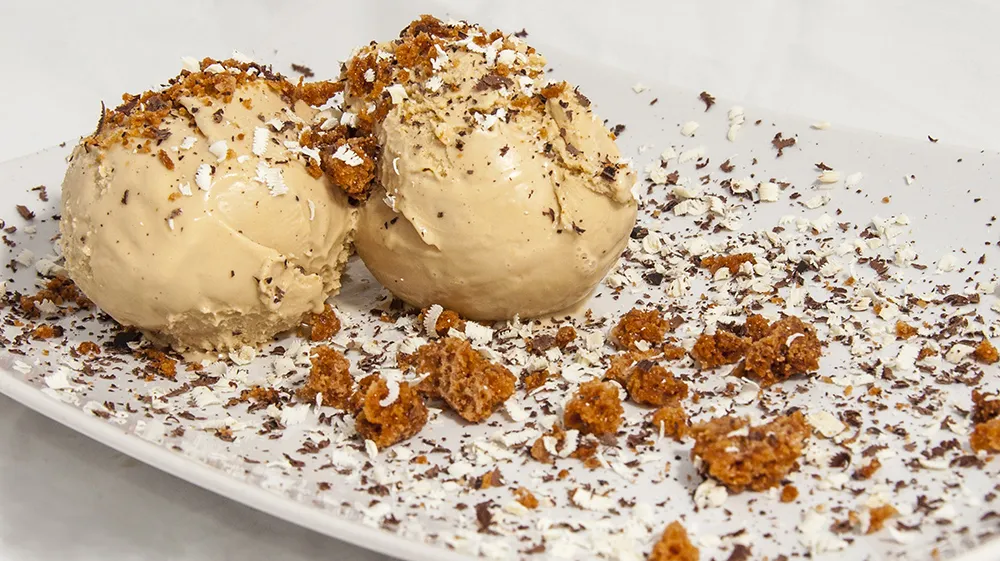
Green tea ice cream with crunchy coconut cookies.

Dessert

Green Tea Ice Cream with Coconut Crunch

50 min 4 servings

A fresh yet creamy, smooth ice cream made with green tea, taking its flavours from the Far East. It makes a wonderful end to a dinner, leaving everyone refreshed and contentedly full.

Servings
4

Ingredients

Ice cream

  • Milk0.6 cups
  • Cream0.6 cups
  • Green tea3.4 fl oz
  • Egg yolks2 pcs
  • Egg white1 pcs
  • Sugar1.7 fl oz
  • Raw sugar1.7 fl oz

Coconut crunch

  • Coconut flakes1.1 cups
  • Sugar0.6 cups
  • Eggs1 pcs
  • Flour1 fl oz
  • Butter2.6 oz

Nutrition per serving

Energy737 kcal
Protein7.7 g
Carbohydrates62.7 g
Fat50.6 g
Fiber2.2 g

Instructions

Ice cream Bring the cream and milk to the boil, add the tea and simmer for a couple of minutes. Don’t let it simmer for too long, as it turns bitter. Whisk the egg yolks with the sugar and raw sugar until really pale and fluffy, then stir in the tea mixture. Heat gently, whisking constantly, until the mixture starts to thicken; this happens at 80–85°C (175–185°F). As soon as it has thickened, cool it in an ice-cold water bath. Whisk the egg white to stiff peaks and fold it into the cold mixture to make the ice cream lighter. Churn in an ice cream maker until done.

Coconut crunch Whisk the eggs, sugar and room-temperature butter together; the mixture shouldn’t be whisked too stiff. Add the flour and coconut and mix well. Spoon small cookies onto baking paper and bake at 175°C (350°F) for about 15 minutes, until golden brown. Let them cool on a wire rack.

Serving Place a couple of scoops of ice cream on a plate and scatter over a few crushed coconut cookies. Any cookies left over will be delicious with your morning coffee the next day.

Have you cooked it?

Rate it and help others choose.

Tips & Inspiration

Dessert wine

The wine should be at least as sweet as the dessert, preferably sweeter, or it will taste sour and thin. Sweet white wines such as Sauternes go with fruity and creamy desserts. Chocolate desserts can take more powerful wines such as port. With tart berries and citrus, a light, sweet sparkling wine such as Moscato d'Asti works well.

Crème anglaise

Vanilla custard and most ice cream bases are built on crème anglaise: milk and cream thickened with egg yolks and sugar. Heat gently, stirring, until the custard thickens and coats the back of a spoon, at around 82–85°C (180–185°F). It must not boil, or the yolks set into small lumps. Strain the custard if you like, and cool it quickly.