Main Course
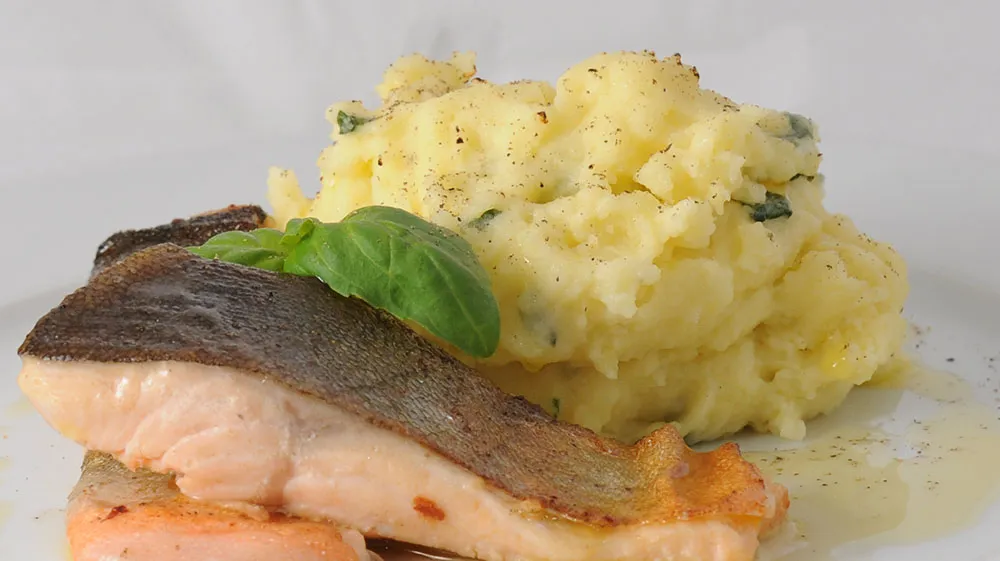
Butter-Fried Arctic Char with Potato Purée
Arctic char is without a doubt one of our favourites among the salmon family, and it is at its best when kept simple – as here, gently fried in butter. Serve it with a creamy potato purée and a drizzle of clarified butter, and you have an elegant meal on the table in no time.
Ingredients
- Arctic char fillet1.3 lb
- Potatoes1.8 lb
- Egg yolks4 pcs
- Butter1.8 oz
- Cream2 fl oz
- Grated cheese, mature3.4 fl oz
- Fresh basil
- Salt
- Pepper
Nutrition per serving
Instructions
Peel and boil the potatoes until tender. Mash them with half of the butter, the cream, egg yolks and grated cheese, then whisk with an electric mixer until smooth and creamy. Roughly chop a few basil leaves and gently fold them into the purée.
Make sure the Arctic char is completely free of bones, then cut it into suitable portions and season with salt and freshly ground black pepper.
Heat a little oil in a frying pan over high heat and cook the fish skin-side down. Once the skin is crisp and golden, reduce the heat and add a knob of butter. Turn the fish and gently finish cooking on the other side, spooning the foaming butter over the fish as it cooks.
Serve the Arctic char with the creamy potato purée and a little clarified butter drizzled over the top.