Dessert
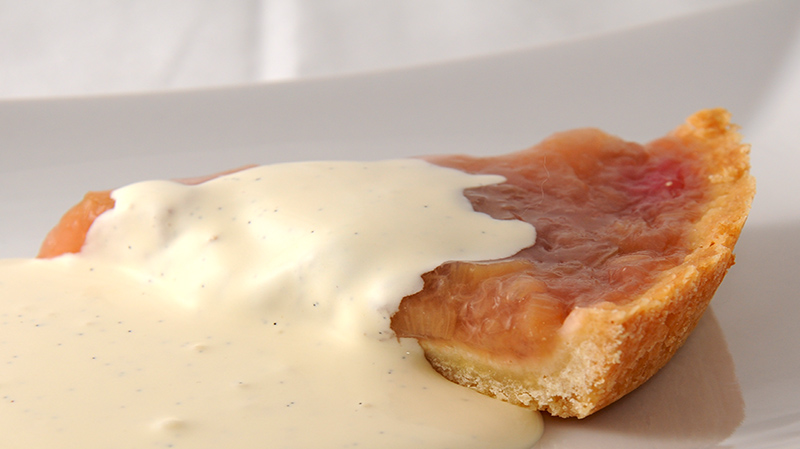
Rhubarb Pie with Vanilla Custard
Rhubarb is a classic in Swedish gardens, and for many its flavour means summer and lush green gardens. With the rhubarb pie we make a truly wonderful homemade vanilla custard. In French, vanilla custard is called crème anglaise, which translates as "English sauce", most likely because of the English fondness for custard. Making a proper vanilla custard isn't difficult if you follow our instructions.
Ingredients
Pastry
- Flour1.1 cups
- Sugar2.5 fl oz
- Butter3.5 oz
- Water1 tsp
Filling
- Rhubarb stalks3 pcs
- Sugar0.6 cups
- Water1 tbsp
- Potato starch2 tsp
Vanilla custard
- Egg yolks3 pcs
- Milk3.4 fl oz
- Cream3.4 fl oz
- Sugar3.4 fl oz
- Vanilla pod1/2 pcs
Nutrition per serving
Instructions
Pastry
Take the butter out an hour or so beforehand so it comes to room temperature. Heat the oven to 225°C (440°F). Mix the butter with the rest of the pastry ingredients and knead into a smooth dough. Let the dough rest in the fridge for about 30 minutes, then press it into a pie dish and pre-bake it for about 10 minutes.
Filling
While the pastry case is pre-baking, slice the rhubarb stalks. Put them in a saucepan with the sugar, water and potato starch and simmer for about 10 minutes, until the rhubarb is pleasantly soft. Pour the filling into the pastry case and bake for about 20 minutes.
Vanilla custard
The recipe makes about 500 ml (2 cups) of custard. If you know your guests are crazy about custard, it is well worth doubling it. Start by mixing the milk and cream in a saucepan. Slit the vanilla pod lengthways to open it up, then run the knife along the inside to scrape out all the seeds. Add the seeds and the pod to the saucepan and bring to the boil, then simmer gently for about 5 minutes. Milk burns easily, so keep stirring with a whisk.
Take the pan off the heat and leave it to infuse for about 10 minutes. This also lets it cool a little, which is important so the eggs don’t curdle. Meanwhile, separate the eggs. Keep the whites: they make meringues, or why not a healthy omelette? Whisk the yolks with the sugar until pale and fluffy. Remove the vanilla pod from the milk and cream, then stir in the whisked yolks.
Now comes the most critical step: the custard should be heated to about 75°C (167°F). If you have never made it before, a good kitchen thermometer is essential. Heat over medium heat, whisking constantly, until the custard reaches about 75°C. The exact temperature can vary a little, but by then the custard should have thickened. If you heat it too much, it will curdle. As soon as it has thickened, put the pan straight into an ice-cold water bath and keep whisking for another minute or so. Then leave the custard to cool. It is best made the day before and left in the fridge overnight to really take on all the lovely vanilla aromas.
Tip: For a slightly fresher custard, add the zest of a lime or lemon together with the vanilla pod at the start.