Main Course
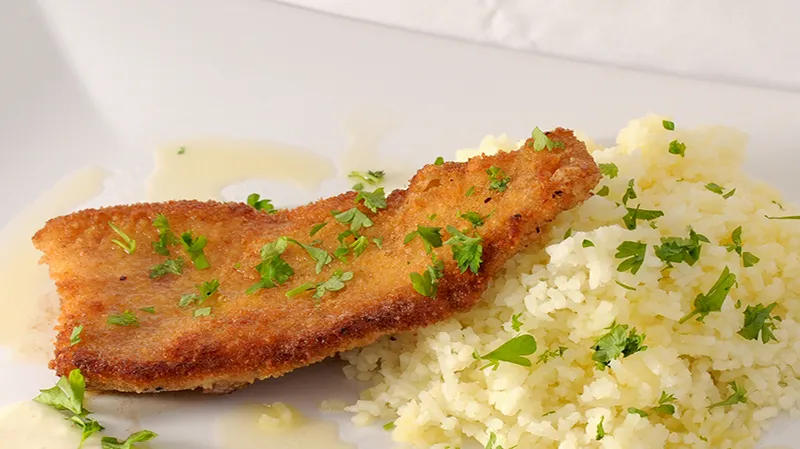
Double-Breaded Plaice
Plaice is a wonderful eating fish. Breading it twice gives it a crisp exterior while the fish itself cooks gently, protected by the coating. The double breading makes a thicker, luxuriously crunchy crust with a lovely buttery flavour.
Ingredients
- Plaice fillets1.3 lb
- Wheat flour0.8 cups
- Breadcrumbs1.3 cups
- Eggs2 pcs
- Salt
- Pepper
- Floury potatoes1.8 lb
Nutrition per serving
Instructions
If you are not lucky enough to find a fishmonger with fresh plaice, frozen works well. Let the frozen plaice thaw slowly in the fridge, ideally overnight.
Breading Pat the fillets dry with kitchen paper. Spread flour, beaten egg and breadcrumbs on separate plates. Season the flour well with salt and pepper.
Season the fillets on both sides. Turn them first in the flour and tap off the excess, then in the egg and finally in the breadcrumbs.
Lay the coated fillets on a plate and leave them in the fridge for a while, ideally 15–30 minutes. The coating dries a little, holds together better in the pan and soaks up more of the butter.
Fry the fillets in plenty of butter in a medium-hot cast-iron pan until the coating is golden, about 1 minute per side.
Riced potatoes
Peel the potatoes and boil them until done. Then press them through a potato ricer straight onto the plates.
Plating Place the fish on top of the potatoes. Garnish with fresh herbs if you like.