Three-course menu

New Year’s Eve Menu

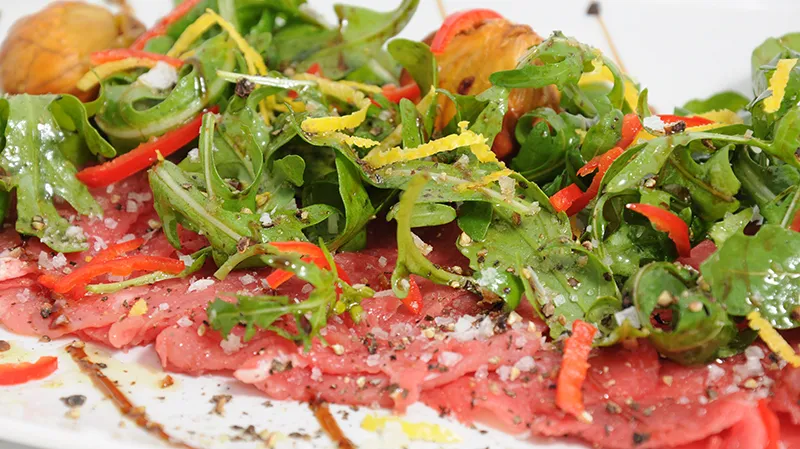
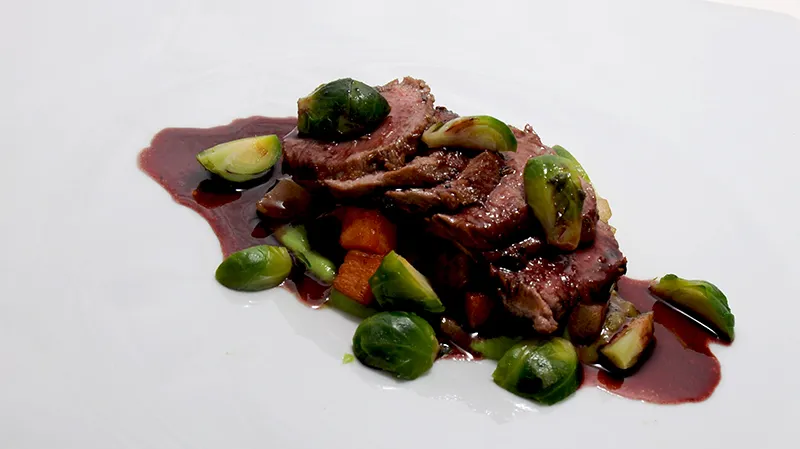
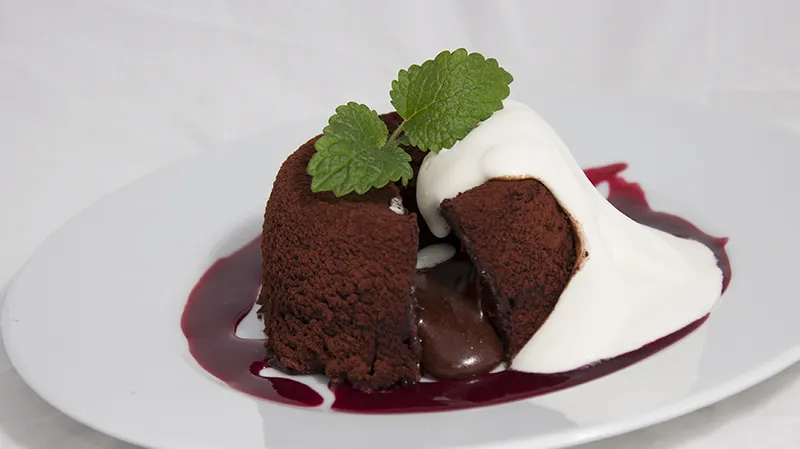
This menu has a little bit of everything. It starts with a bang: an Italian carpaccio, where bold flavours meet the delicate tenderness of beef fillet. Next comes a beautifully balanced lamb fillet, bringing together a variety of flavours that melt together in every bite. And finally, something warm and indulgent before it’s time to head out into the cold and welcome the New Year – perhaps with a glass of something sparkling in hand: the classic chocolate fondant.

Carpaccio

Starter

Carpaccio

25 min 4 servings

An intriguing delicacy from the Italian kitchen. The raw beef appeals to something wonderfully primal, while the other carefully chosen ingredients lend the dish an air of sophistication. It is this contrast that makes the carpaccio so captivating – a dish that awakens the senses and leaves an impression that lingers long into the evening.

Servings
4

Ingredients

Carpaccio

  • Beef tenderloin7.1 oz
  • Black peppercorns1 tbsp
  • Flaky salt1 tbsp
  • Red chili1 pcs
  • Lemon1/2 pcs
  • Parmesan1.8 oz
  • Arugula salad
  • Crema di Balsamico
  • Olive oil

Nutrition per serving

Energy124 kcal
Protein16.2 g
Carbohydrates1.7 g
Fat5.8 g
Fiber0.3 g

Instructions

Place the beef fillet in the freezer for a few hours – this will make it much easier to slice. Cut the beef into very thin slices; a seriously sharp knife is essential here. Alternatively, place slightly thicker slices between two sheets of baking parchment and gently flatten them with a rolling pin. The thinner and more beautiful the slices, the better.

Arrange a generous layer of beef on a plate. Scatter over a few rocket leaves, then coarsely grate the Parmesan – or shave it into thin slices – and sprinkle it over the beef. Top with a little finely chopped chilli, some flaky sea salt and a touch of lemon zest. Drizzle over a few quick, thin streaks of olive oil and Crema di Balsamico (balsamic glaze), followed by a few drops of fresh lemon juice. Finish with a touch of freshly ground black pepper and serve immediately. If your guests don’t appreciate this, you have invited the wrong guests to dinner!

There are plenty of delicious ways to vary the toppings on your carpaccio. Why not try a little shaved truffle, toasted sunflower seeds or even some finely shaved dark chocolate? You can also swap the beef for fresh tuna or salmon. The only limit is your imagination.
Have you cooked it?

Rate it and help others choose.

Tips & Inspiration

Sharp knives

Sharp knives are the key to enjoyable cooking. The classic honing steel, a steel rod with fine lengthways grooves, straightens the edge of the knife and makes a sharp knife sharper. Once the edge has gone dull, though, the knife needs sharpening on a whetstone of stone, ceramic or diamond. If you are unsure how to sharpen knives, it is best to leave them with a professional.

Carpaccio

Carpaccio was created at Harry's Bar in Venice and named after the Renaissance painter Vittore Carpaccio, known for his vivid reds. The secret is thin slices: freeze the meat for a while so it firms up and is easier to cut, and use a really sharp knife. The slices can then be flattened further between two sheets of baking paper.

Lamb Loin with Sautéed Root Vegetables, Pea Purée and Red Wine Sauce

Main Course

Lamb Loin with Sautéed Root Vegetables, Pea Purée and Red Wine Sauce

2 h 4 servings

This dish brings together a wonderful combination of flavours and textures. The smooth, slightly sweet pea purée meets the rustic, golden edges of the sautéed root vegetables, while the beautifully tender lamb takes centre stage. A slightly tangy red wine sauce ties everything together. A perfect main course when you want to make the evening feel just a little more special.

Servings
4

Ingredients

  • Lamb striploin1.3 lb
  • Garlic clove1 pcs
  • Rosemary
  • Olive oil
  • Black salsify4 pcs
  • Jerusalem artichokes4 pcs
  • Brussels sprouts32 pcs

Pea Purée

  • Peas1.3 cups
  • Cream3.4 fl oz

Red Wine Sauce

  • Shallot1 pcs
  • Butter1 fl oz
  • Red wine1.3 cups
  • Lamb broth3.4 fl oz
  • Bay leaves2 pcs
  • Balsamic1 tsp
  • Thyme1 tsp

Nutrition per serving

Energy603 kcal
Protein39.2 g
Carbohydrates27.5 g
Fat30.8 g
Fiber12 g

Instructions

Pea Purée Cook the peas in lightly salted water for about 3 minutes, or until tender. Drain and blend with a hand blender until smooth. Pass the purée through a fine-mesh sieve to remove any remaining pieces, using a spatula or similar utensil to press the peas through the sieve. Add the cream, blend again until silky smooth and season with salt to taste.

Red Wine Sauce Finely chop the shallot and gently sauté it in butter together with the thyme. The shallot should become soft and translucent without browning. Add the remaining ingredients and simmer for 15 minutes.

Strain the sauce to remove the shallot, thyme and bay leaves, leaving a smooth, clear liquid. Return it to the pan and reduce until it begins to thicken slightly. The time required will depend on how vigorously it simmers and the size of your saucepan, but around 30 minutes is a good guideline.

Lamb Loin Rub the lamb with olive oil, garlic and rosemary. Sear quickly on all sides in a hot frying pan, then transfer to the oven and cook until the internal temperature reaches 55°C (130°F). Remove from the oven, loosely wrap in foil and leave to rest for about 10 minutes.

Root Vegetables Dice all the root vegetables and briefly boil them until they begin to soften. The Jerusalem artichokes will be ready first, followed by the sweet potato and finally the salsify, so remove them from the water accordingly.

Fry the vegetables in a generous amount of butter, preferably in the same pan used for the lamb to pick up some of the remaining rosemary and flavours. Sauté until they develop a lightly golden, rustic surface.

Roast the Brussels sprouts in an ovenproof dish with a knob of butter at 225°C (435°F) for about 10–15 minutes. This simple preparation really brings out their flavour.

To Serve In our presentation, the pea purée forms the base of the plate, followed by the sautéed root vegetables with the sliced lamb arranged on top. Place the halved Brussels sprouts around the plate and finish with about 1–2 tablespoons of the red wine sauce.

Have you cooked it?

Rate it and help others choose.

Tips & Inspiration

Reducing

Reducing something, a sauce for example, means simmering it gently so that water boils off, the flavours become stronger and more concentrated, and the consistency thickens. It can also be a stock made from, for example, crayfish shells or vegetables that is reduced into a wonderful broth.

Jerusalem artichokes

Despite the name, the Jerusalem artichoke is not related to the globe artichoke. It is a sunflower, and what we eat are the plant's tubers. The flavour is sweet and nutty and works just as well in a smooth soup as roasted in the oven. There is no need to peel the tubers if you scrub them well. Jerusalem artichokes contain inulin, a dietary fibre that can cause some wind if you eat a lot.

Chocolate Fondant with Raspberry Sauce

Dessert

Chocolate Fondant with Raspberry Sauce

40 min 4 servings

This dessert is a true classic – and for good reason. A warm, rich chocolate cake with a soft, almost molten centre, served with silky cream and a raspberry sauce that adds just the right touch of tartness to bring everything together.

Servings
4

Ingredients

Raspberry Sauce

  • Raspberries8.8 oz
  • Sugar1.7 fl oz
  • Water1.3 cups

Chocolate Fondant

  • Butter3.5 oz
  • Dark chocolate3.5 oz
  • Light muscovado sugar3.5 oz
  • Flour3.5 oz
  • Eggs2 pcs
  • Egg yolks2 pcs
  • Whipping cream0.8 cups

Nutrition per serving

Energy823 kcal
Protein11 g
Carbohydrates69.6 g
Fat55.4 g
Fiber3.2 g

Instructions

Raspberry Sauce Cook the raspberries and water until the berries have completely broken down, adding a little more water if needed. Pass the mixture through a fine-mesh sieve to remove the seeds and pulp, leaving a smooth raspberry liquid.

Add the sugar, bring back to the boil and simmer until the sauce has reduced and begins to thicken.

Chocolate Fondant Thoroughly butter four individual moulds and dust the insides with cocoa powder.

Melt the chocolate and butter together. In a separate bowl, whisk the eggs, egg yolks and sugar until pale and fluffy. Gradually whisk in the melted chocolate and butter until evenly combined, then gently fold in the flour.

Bake at 200°C (390°F) for about 10 minutes, until the tops are set while the centres remain soft and molten.

Gently loosen the edges and check that the fondants are not sticking to the moulds. Place a serving plate upside down over each mould, then carefully turn them over together and lift away the mould.

Serve immediately with softly whipped cream.

Have you cooked it?

Rate it and help others choose.

Tips & Inspiration

Chocolate

Chocolate is made from cocoa beans that are first fermented for about a week and then dried and roasted. This process creates the rich complexity of flavours we associate with chocolate.

Bain-marie

Chocolate melts most evenly in a bain-marie: a bowl set over a pan of simmering water, without the bowl touching the water. White chocolate is the most delicate and burns easily, so take it off the heat before it has all melted and stir until smooth. Watch out for splashes and steam; just a few drops of water can make chocolate seize and turn grainy.