Starter
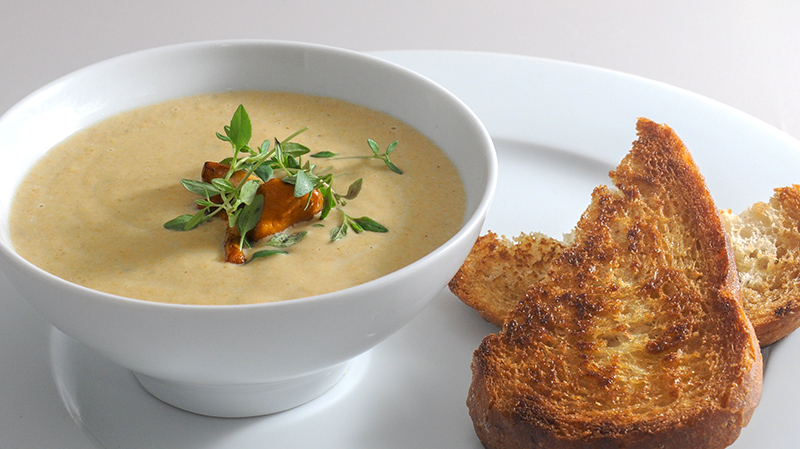
Chanterelle Soup
Chanterelles are the hidden gold nuggets of the autumn forest, a real delicacy that can be hard to find unless you know where to look. Once you have found your chanterelle spot, which sometimes turns out to be the vegetable aisle of the supermarket, you can enjoy this culinary treat. Chanterelles go especially well with butter and cream, and together they make a gastronomic highlight. The soup is fairly quick to make, but it can of course also be made the day before and warmed up when the guests arrive. As the host, it is nice to have time for your guests too.
Ingredients
- Chanterelles8.8 oz
- Shallot2 pcs
- Cream1.3 cups
- Milk1.3 cups
- Honey2 tsp
- Bread slices4 pcs
- Butter1.4 oz
- Fresh thyme
- Salt
- Black pepper
Nutrition per serving
Instructions
Set aside a few nice small whole chanterelles for garnish. Roughly chop the rest and fry them in butter with the chopped shallots for about 5 minutes. Transfer to a saucepan and add the cream, milk, honey, black pepper and fresh thyme. Simmer for 5 minutes, then blend with a stick blender until smooth. Let it simmer and reduce for about another 10 minutes, stirring. Finally, season with salt.
Cut the bread slices diagonally and fry them in butter until golden brown. Then fry the chanterelles you set aside for a few minutes.
Ladle the soup into bowls and garnish with the fried chanterelles and a sprig of fresh thyme if you like. Serve with the bread and enjoy!